Effects of NPK Fertilization on Root Development and Nutrient Uptake Response to Calcium in Cypress Families under Low-Fertility Soil
The vast hilly and mountainous areas of subtropical China are the main distribution regions for fast-growing plantations, characterized by infertile, acidic yellow or red soils. Due to climate change, acid deposition areas have expanded, causing significant leaching of base ions—especially calcium—and leading to nutrient deficiency and soil degradation. This has severely limited the growth and productivity of forests in these regions.
Essential nutrients for tree growth include nitrogen (N), phosphorus (P), potassium (K), and calcium (Ca). Their accumulation and distribution in plants form the basis for growth and development, while adequate soil nutrients significantly promote seedling root development. Among these, exogenous calcium can promote the root growth of trees and crops and enhance seedlings’ uptake of N, P, and K. However, high concentrations of calcium may inhibit plant growth and development.
Roots are critical for water and nutrient absorption and provide support for plant stability. Fine roots (≤1.5 mm in diameter) play a vital role in nutrient uptake, accounting for the majority of total root length and surface area, while coarse roots mainly serve transport and support functions. Calcium deficiency in acidic or base-saturated soils has become a limiting factor for the growth of trees and crops, but genetic differences in calcium absorption among roots of different diameters have not been thoroughly studied.
Cypress (Cupressus funebris Endl.) is an endemic and valuable tree species in China, distributed mainly in the Yangtze River basin and southern regions. It is highly adaptable, especially thriving on calcareous soils in limestone mountains. Despite being calcium-loving, the varied soil types and properties affect the development and productivity of cypress plantations. Understanding the patterns of root growth and nutrient use in different soil conditions is essential for improving cypress breeding, site selection, and fertilizer management.
Materials and Methods
A pot experiment was conducted using five elite cypress families (T1, T2, T3). One-year-old seedlings were grown in acidic red soil with low fertility. Two nutrient conditions were set: with and without NPK slow-release fertilizer (3 g/kg). Three levels of calcium (CaSO₄ at 0, 3, and 6 g/kg) were applied. The experiment was arranged in a completely randomized block design with three replications per treatment, totaling 900 seedlings.
Throughout the growing season, seedlings were managed under standard irrigation and shading conditions. At harvest, plant height was measured, and roots were washed and analyzed for length, surface area, and volume using image analysis software. Root diameters were classified into five grades. The dry mass of roots, stems, and leaves was measured after oven drying. N, P, and Ca content in tissues was determined by standard laboratory methods. Statistical analyses included ANOVA and correlation tests.
Growth and Biomass:
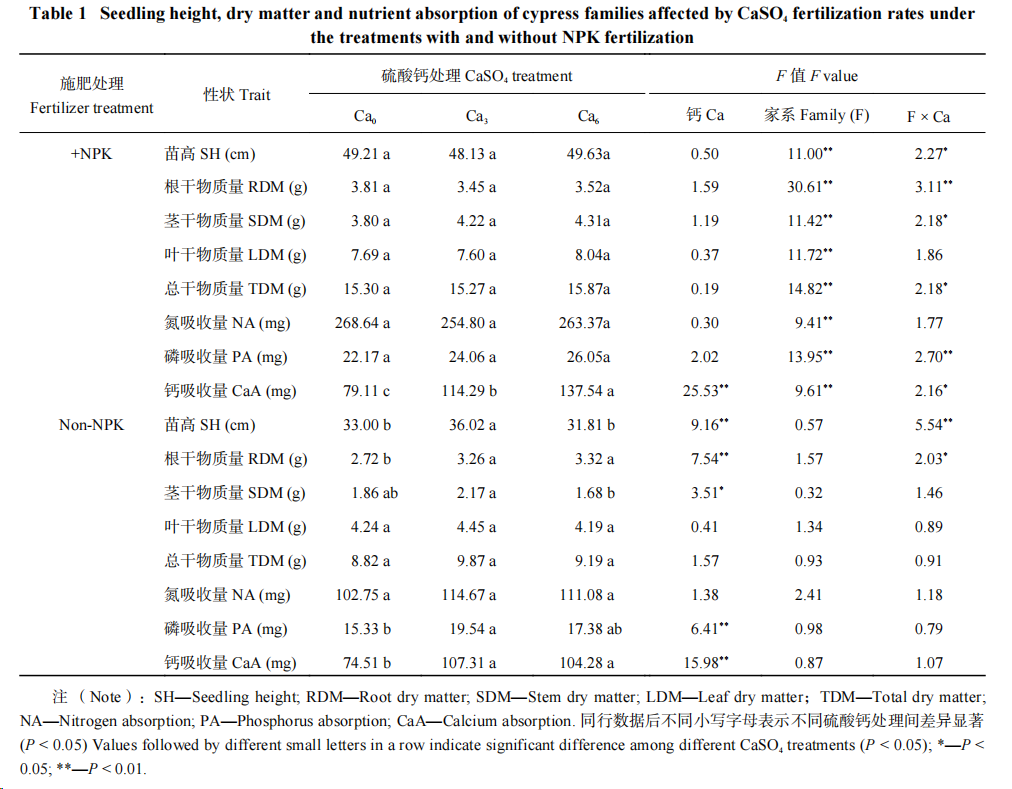
With NPK application, cypress families showed significant differences in seedling height and biomass, but additional calcium had little effect.
Without NPK, moderate calcium (3 g/kg) significantly improved seedling height, root, and stem biomass, but excessive calcium (6 g/kg) inhibited growth.
Family T2 consistently performed best in growth and nutrient absorption.
Root System:
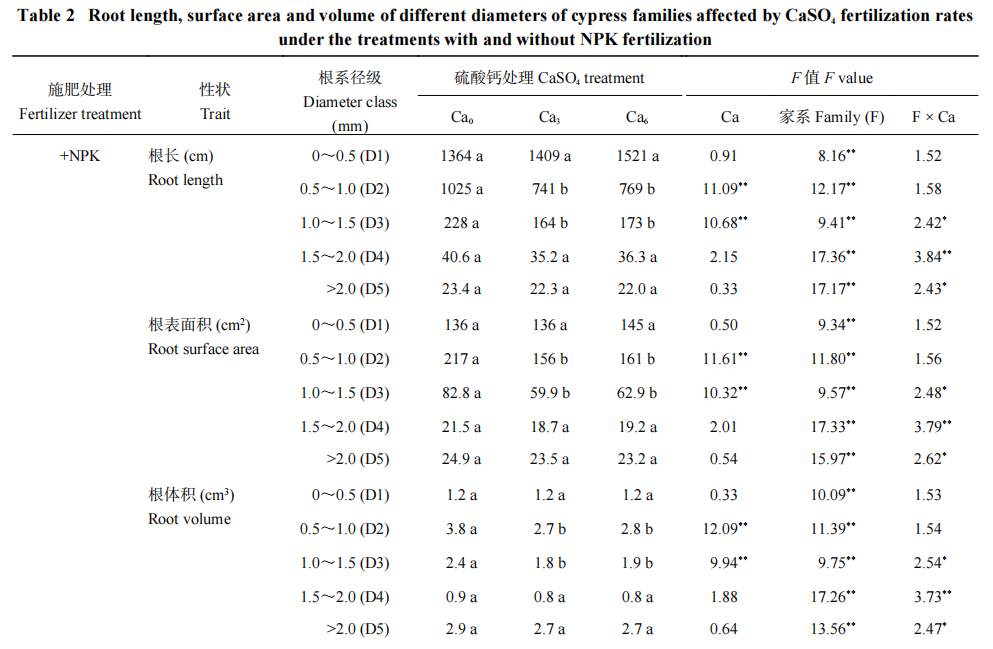
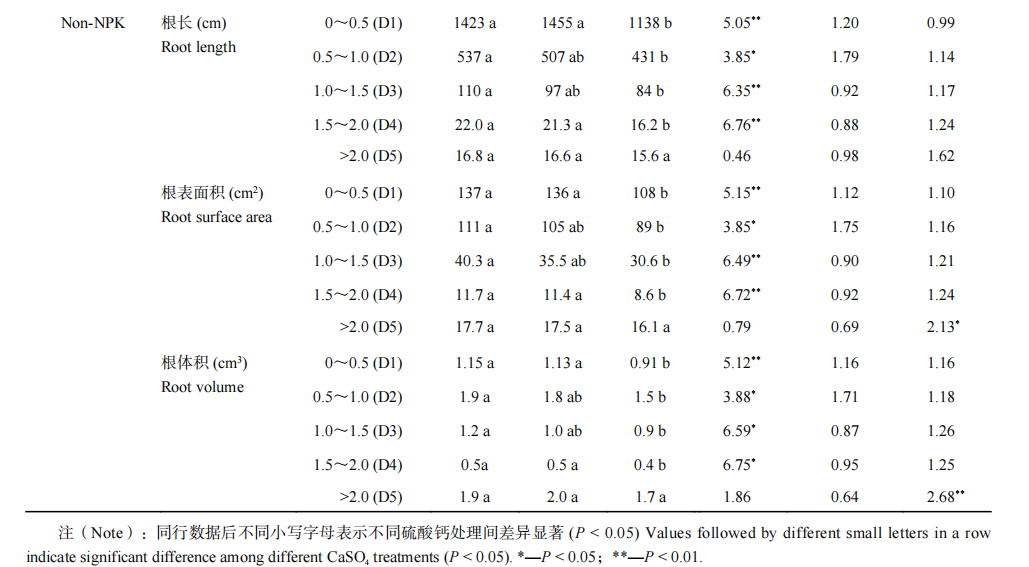
NPK application and calcium treatment had significant effects on root length, especially fine roots (D2, D3).
Application of calcium suppressed the length and surface area of fine roots, while the proportion of ultra-fine roots (≤0.5 mm) increased under poor soil conditions without NPK.
Differences in root development among families were evident with fertilizer but not without.
Nutrient Uptake:
Calcium addition generally increased Ca and P absorption, especially under no NPK conditions, but did not significantly affect N uptake.
Excessive calcium could decrease phosphorus absorption, indicating an optimal range for Ca supply.
Correlations:
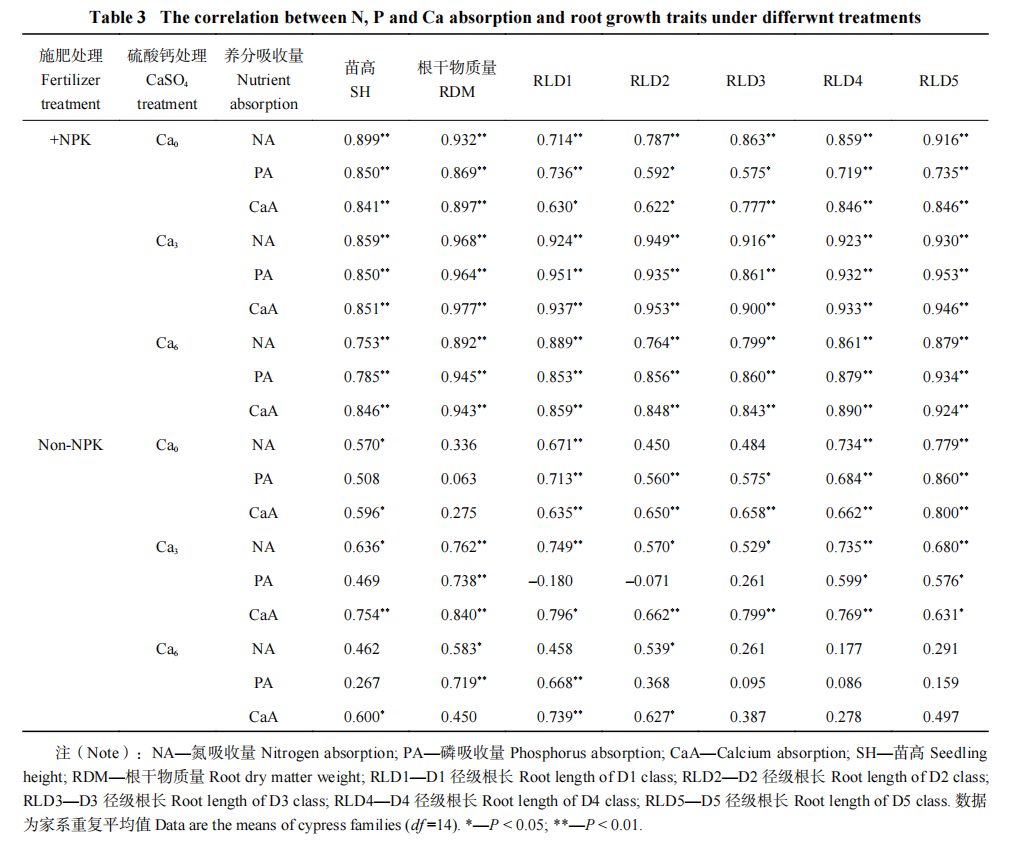
Nutrient absorption was positively correlated with root mass and length, especially under moderate calcium supply.
The sensitivity of root traits to nutrient uptake varied with family genetics and nutrient conditions.
Discussion
Application of NPK fertilizer in calcium-deficient soils reduced the response of cypress seedlings to calcium. Seedling family was the main factor influencing growth.
Without NPK, a moderate amount of calcium (CaSO₄ at 3 g/kg) promoted seedling growth, but too much calcium inhibited root development.
Fine roots are the primary site of nutrient uptake and show high plasticity to environmental changes.
There may be a synergistic effect between Ca and P uptake, but excess calcium disrupts this balance.
Root system morphology and nutrient uptake efficiency vary by genotype, highlighting the importance of selecting elite families for reforestation in poor soils.
Conclusion
Calcium fertilizer significantly affects the growth of fine roots and nutrient absorption in cypress seedlings. In poor, calcium-deficient soils, NPK fertilizer is more effective in promoting seedling growth, but moderate calcium application can be beneficial in the absence of NPK. Selecting high-performing families and appropriate fertilization strategies is crucial for improving cypress plantation productivity in subtropical China.
READ MORE
Online Control WiFi Soil Nutrient Tester: Precision Plant & Lawn Care
WiFi Online Soil Quality Detector: Smart Lawn and Garden Management


For more questions
subscribe to our email
.png)
.png)
.png)