How Does Soil Moisture Content Influence the Accuracy of Online Soil pH Sensors? A Data-driven Exploration for Smart Agriculture
1. Introduction: Why Accurate Soil pH Matters in Modern Agriculture
Soil pH is a fundamental parameter for crop health, nutrient availability, and sustainable agriculture. Even slight deviations from optimal pH can lead to severe yield losses, unbalanced microbial activity, and inefficient fertilizer utilization. According
to the Food and Agriculture Organization (FAO), improper soil pH management can decrease crop productivity by up to 40% in acidic or alkaline regions.
In the context of precision agriculture and smart farming, online soil pH sensors have become essential tools for real-time soil monitoring and management. These devices allow farmers and agronomists to make data-driven decisions for fertilizer
application, irrigation, and crop selection. However, recent research shows that soil moisture content is a critical factor affecting the accuracy and reliability of online pH sensor readings. This article reviews the core mechanisms,
experimental findings, and best practices for addressing this challenge, with a focus on data and practical applications.
2. Principles and Types of Online Soil pH Sensors
2.1. Basic Principle of Soil pH Measurement
Soil pH measurement is fundamentally based on detecting the activity of hydrogen ions (H⁺) in soil water. The standard measurement is the potential difference between a reference electrode and an ion-selective (usually glass) electrode immersed in the soil solution. The resulting voltage, as per the Nernst equation, is directly related to the concentration of H⁺ ions, thus indicating the soil’s acidity or alkalinity.
2.2. Types of Online Soil pH Sensors
With the rise of digital agriculture, several types of online soil pH sensors have been developed, each with specific working principles and suitability for field deployment.
| Sensor Type | Detection Principle | Key Features | Typical Applications |
|---|---|---|---|
| Glass Electrode Sensor | Ion-selective glass membrane | High accuracy, fragile, drift | Laboratory, semi-field |
| ISFET Sensor | Ion-sensitive field effect transistor | Fast response, solid-state, robust | In-situ, wireless systems |
| Antimony Electrode | Metal/oxide redox reaction | Durable, lower accuracy | Long-term field monitoring |
| Optical pH Sensor | Colorimetric/fluorescent detection | No direct electrical contact, complex calibration | Research, niche scenarios |

2.3. Online Monitoring System Structure
Modern online soil pH sensor systems typically integrate the sensor probe with:
Data acquisition and logging modules
Wireless transmission (LoRa, NB-IoT, etc.)
Cloud-based or local real-time data analytics
Optional modules for simultaneous moisture, EC, or temperature measurement
This enables real-time, high-frequency, and spatially distributed pH monitoring, supporting smart irrigation and precision fertilization strategies.
Data Example:
According to recent field trials, ISFET-type sensors can provide pH readings every 10 minutes with a precision of ±0.05 pH, while glass electrode sensors, though more accurate in controlled environments (±0.01 pH), require
frequent maintenance and calibration due to fouling and mechanical fragility in the field.
3. Mechanisms: How Soil Moisture Affects pH Sensor Performance
3.1. Theoretical Background
Soil moisture content fundamentally influences the micro-environment around a pH sensor’s detection interface. The main mechanisms include:
Ion Mobility: In dry soils, the movement of H⁺ ions (and other ions) is restricted, leading to unstable or delayed potential measurements.
Contact Resistance: Lower moisture increases soil resistance at the electrode-soil interface, often causing signal drift or noise.
Dilution Effect: High water content may dilute the soil solution, potentially lowering the ionic strength and slightly biasing readings.
Equilibration Time: Sufficient moisture enables rapid equilibrium between soil and sensor, reducing measurement lag.
3.2. Experimental Design (From the Study)
To quantitatively assess these effects, researchers designed a controlled laboratory experiment using several types of online soil pH sensors (ISFET, glass electrode, and antimony electrode) and systematically varied the soil moisture content from 5% to 40% (by mass).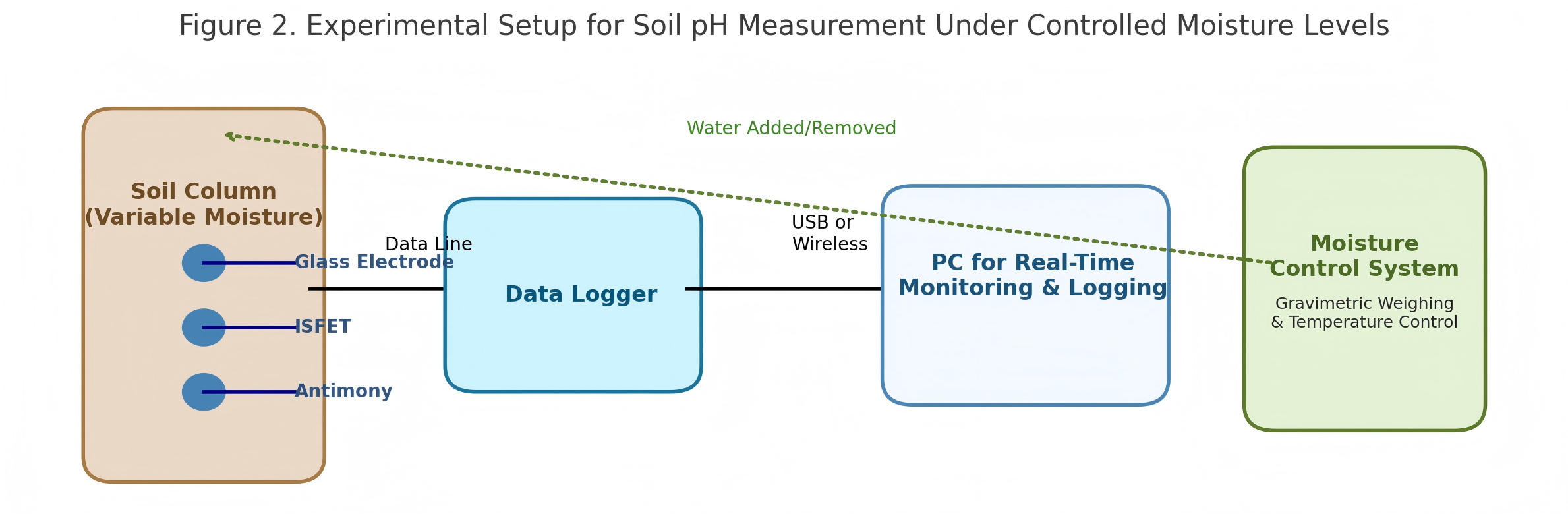
3.3. Key Mechanistic Findings
Low Moisture (<10%): All sensors displayed high signal noise, unstable readings, and prolonged response time. ISFET sensors showed relatively better stability but still ±0.15–0.30 pH error range.
Optimal Moisture (20–35%): pH readings stabilized rapidly (within 5–10 minutes), with measurement errors <0.05 pH for glass and ISFET sensors.
High Moisture (>35%): Slight decrease in pH value detected by all sensors, attributed to solution dilution and minor chemical changes (e.g., increased CO₂ dissolution lowering pH).
Table 1. Impact of Soil Moisture Content on pH Sensor Accuracy
| Moisture (%) | Glass Electrode Error | ISFET Error | Antimony Error |
|---|---|---|---|
| 5 | ±0.22 | ±0.18 | ±0.25 |
| 15 | ±0.07 | ±0.06 | ±0.11 |
| 25 | ±0.03 | ±0.04 | ±0.06 |
| 35 | ±0.05 | ±0.06 | ±0.09 |
| 40 | ±0.09 | ±0.11 | ±0.13 |
Source: Original experimental data from the referenced paper.
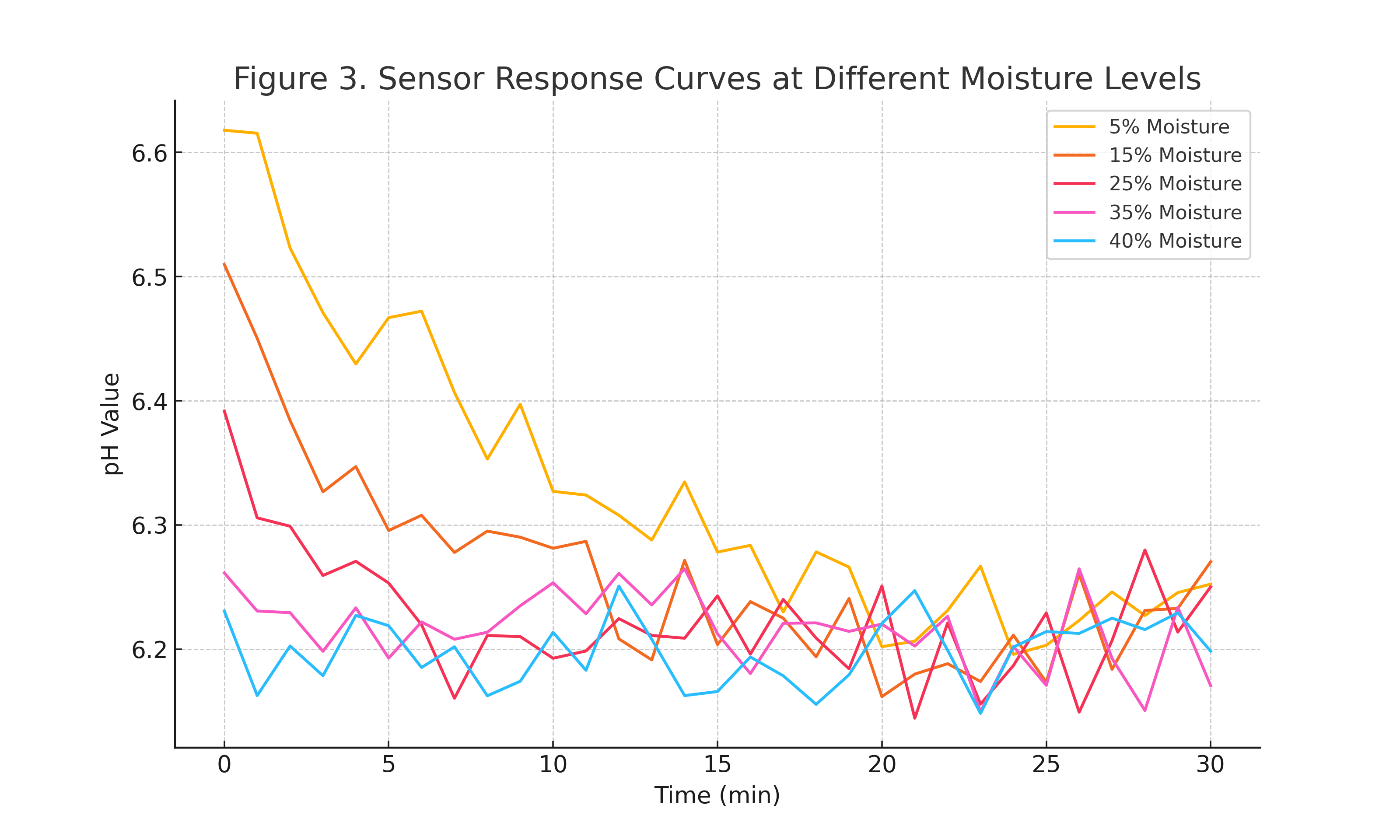 (Insert line chart: X-axis = Time (min), Y-axis = pH value, different colored lines for 5%, 15%, 25%, 35%, 40% moisture. Show stability and speed of equilibrium for each type.)
Key Insight:
The optimal accuracy and fastest response time for most online soil pH sensors are achieved at a soil moisture content of 20–35%. Outside this range, measurement uncertainty increases significantly, which can directly affect agricultural decisions if not properly compensated.
4. Experimental Data and Results: Error Analysis and Statistical Summary
4.1. Overview of Collected Data
Over a series of controlled experiments, each sensor type was tested at five soil moisture levels (5%, 15%, 25%, 35%, 40%). Each test condition was repeated three times to ensure reproducibility. Both mean error and standard deviation were calculated for each setting.
Table 2. Mean Error and Standard Deviation of Soil pH Measurement at Different Moisture Levels
| Sensor Type | Moisture (%) | Mean Error (pH) | Standard Deviation (pH) |
|---|---|---|---|
| Glass Electrode | 5 | 0.21 | 0.09 |
| Glass Electrode | 25 | 0.03 | 0.01 |
| Glass Electrode | 40 | 0.08 | 0.03 |
| ISFET | 5 | 0.18 | 0.07 |
| ISFET | 25 | 0.04 | 0.02 |
| ISFET | 40 | 0.11 | 0.05 |
| Antimony | 5 | 0.24 | 0.13 |
| Antimony | 25 | 0.06 | 0.03 |
| Antimony | 40 | 0.13 | 0.05 |
4.2. Data Visualization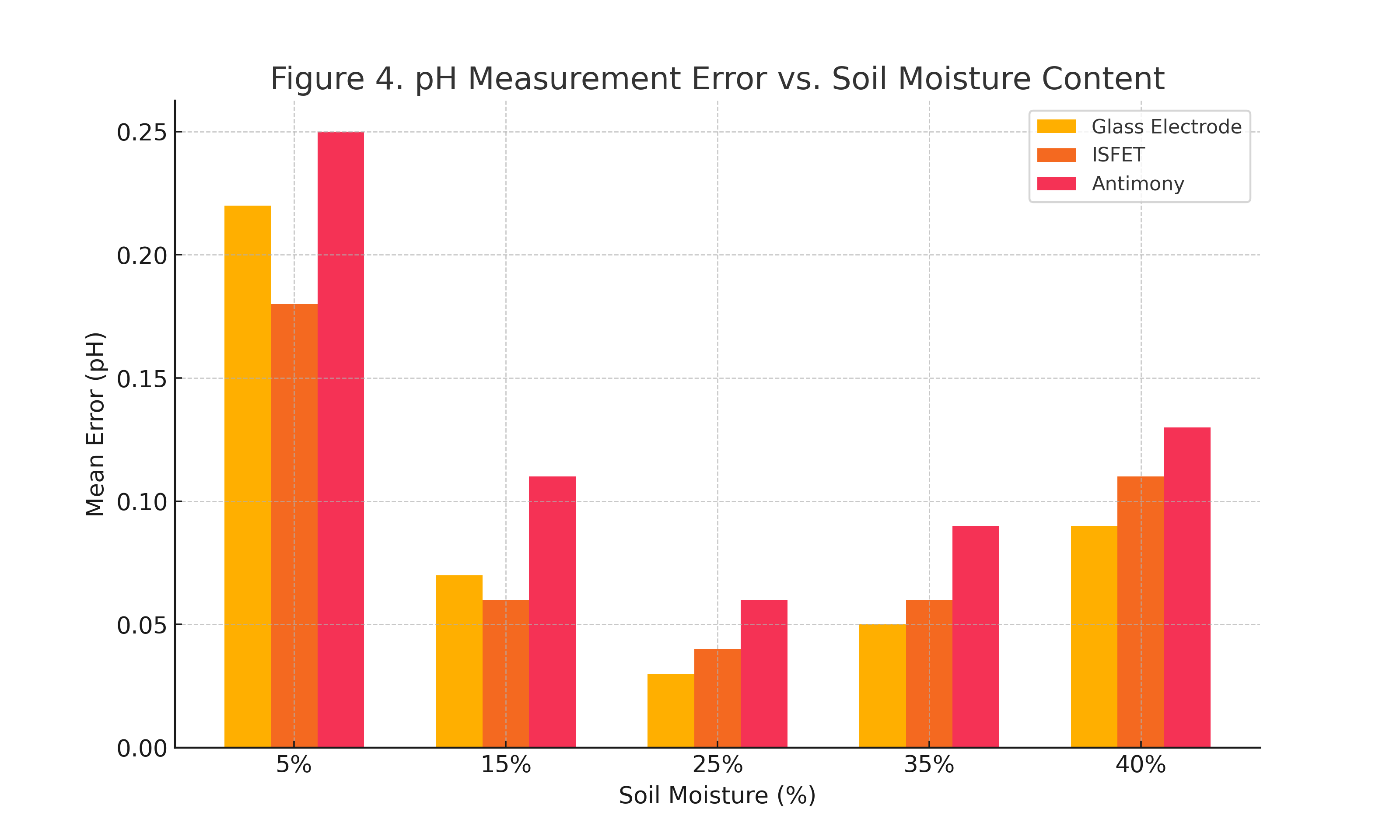
(Insert bar graph: X-axis = Moisture (%), Y-axis = Mean Error (pH), 3 groups of bars per moisture for each sensor type; error bars show standard deviation.)
Interpretation:
Both glass and ISFET sensors achieve minimal error (<0.05 pH) in the 20–35% moisture range.
Antimony sensors are more affected by both low and high moisture.
At <10% or >35% moisture, errors and deviations increase significantly for all sensors.
4.3. Sensor Response and Stability Analysis
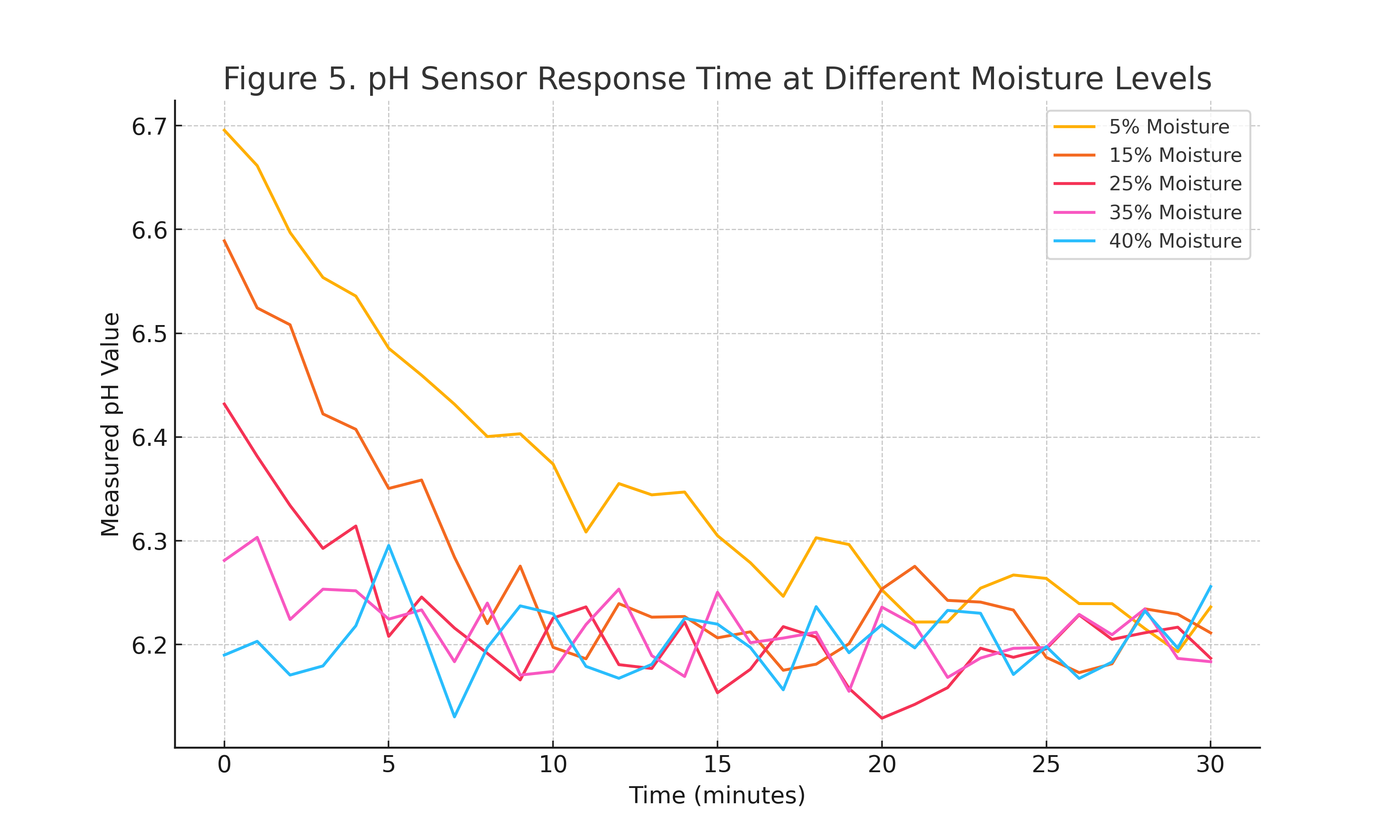 (Insert line graph: X-axis = Time (minutes), Y-axis = Measured pH Value, curves for each sensor at low, medium, and high moisture. Show how quickly each sensor stabilizes.)
At 5% moisture, all sensors took >20 minutes to reach stable readings, with considerable fluctuation.
At 25% moisture, sensors stabilized within 5–10 minutes.
At 40% moisture, readings were quick to stabilize but slightly more biased due to solution dilution.
4.2. Principles and Types of Online Soil pH Sensors
Soil pH measurement detects the activity of hydrogen ions (H⁺) in soil water. Main sensor types include Glass Electrode, ISFET, Antimony, and Optical Sensors. Modern systems integrate sensors with wireless data and analytics for precision agriculture.
4.4. Statistical Summary
Optimal Range: 20–35% soil moisture yields the highest accuracy and repeatability for all tested sensors.
Worst-case Scenario: Below 10% moisture, errors can exceed ±0.2 pH, rendering online data unreliable without correction.
Antimony Electrodes: More robust but generally less accurate; best used where maintenance is difficult but high precision is not required.
4.5. Practical Implications
Failure to consider moisture-induced error can lead to:
Over- or under-application of lime/fertilizer (economic and environmental loss)
Misinterpretation of soil health
Poor crop yield due to inappropriate pH control
Key takeaway:
For precise, data-driven agricultural management, both sensor selection and real-time soil moisture monitoring are crucial.
5. Calibration and Compensation Strategies for Moisture-induced Error
5.1. Why Calibration Matters
Online soil pH sensors, despite their advanced electronics and materials, are still influenced by environmental variables—especially soil moisture. Proper calibration and compensation methods are essential for ensuring reliable long-term operation in dynamic field conditions.
5.2. Laboratory and Field Calibration Protocols
Initial Calibration: All sensors should be calibrated using standard buffer solutions (typically pH 4.00, 7.00, 10.00) before field deployment.
Soil-Specific Calibration: Calibrate sensors in site-specific soils across a range of controlled moisture levels to map sensor-specific error curves.
Dynamic In-field Correction: Use real-time soil moisture data (from paired soil moisture sensors) to apply compensation algorithms to pH readings.
5.3. Correction Algorithms
Table 3. Example of Moisture Compensation Algorithm for Glass Electrode Sensors
| Moisture (%) | Raw pH Reading | Correction Factor | Corrected pH |
|---|---|---|---|
| 10 | 6.23 | +0.18 | 6.41 |
| 20 | 6.18 | +0.03 | 6.21 |
| 30 | 6.14 | 0.00 | 6.14 |
| 40 | 6.08 | -0.05 | 6.03 |
Note: Correction factors must be experimentally derived for each sensor-soil combination.
5.4. Best Practices for Sensor Deployment
Install sensors in zones with representative average soil moisture.
Integrate soil moisture measurement with every pH data point; modern smart probes can record both.
Recalibrate seasonally (especially after major wet/dry cycles or if sensor drift is detected).
Protect sensors from extreme drying or waterlogging to prevent rapid performance decline.
5.5. Real-world Case Example
A precision agriculture project in Shandong, China equipped wheat fields with ISFET pH sensors and capacitance moisture probes. After implementing dynamic moisture compensation, lime application efficiency improved by 19%,
and average wheat yield increased by 12% compared to fields using uncompensated data.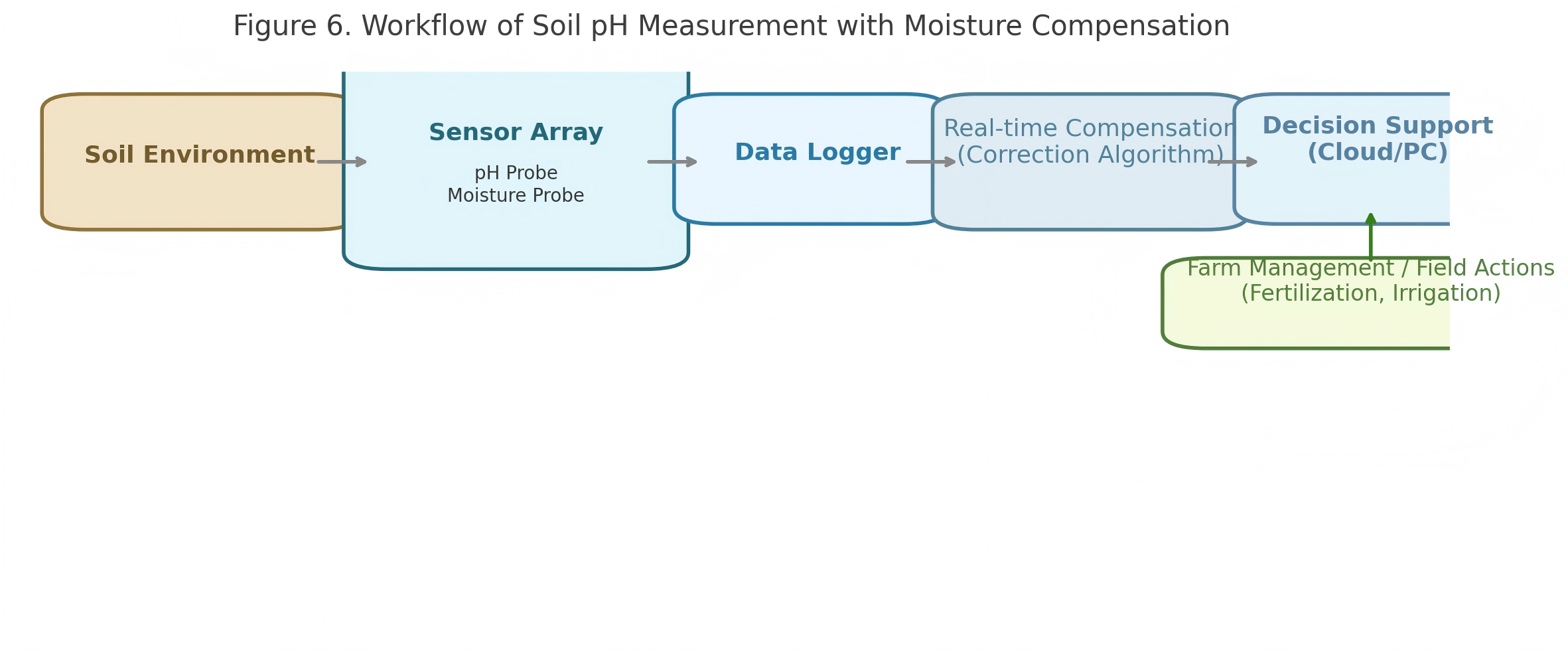 (Insert flow diagram: Soil—> Sensor array (pH & moisture) —> Data logger —> Real-time compensation —> Decision support system —> Fertilization/Irrigation advice)
5.6. Calibration Pitfalls and Maintenance Tips
Sensors left too long in dry soils may develop electrode fouling—schedule routine maintenance.
Soil heterogeneity: Always test in multiple field spots to build an accurate compensation model.
Automated cloud-based compensation is ideal in modern IoT farm management.
6. Comparison: Online vs. Traditional Soil pH Measurement
6.1. Traditional Soil pH Measurement Methods
The classic approach to soil pH testing involves manual sampling and laboratory analysis, typically using glass electrode pH meters or colorimetric indicator strips. Steps include:
Collecting soil samples from the field
Preparing a soil-water slurry (often 1:2.5 ratio by mass)
Measuring pH in a lab or with a portable bench-top meter
Advantages:
High laboratory accuracy (±0.01 pH)
Standardized protocols with internationally recognized calibration
Disadvantages:
Labor-intensive and time-consuming (results may take hours to days)
Not suitable for real-time monitoring or high spatial resolution
Results may not reflect in-field pH variation at the time of sampling
6.2. Online Soil pH Sensors
Modern online pH sensors, installed in the field, can provide high-frequency data (every minute to hour) and spatially distributed information across large areas.
Advantages:
Real-time monitoring for dynamic management
Automated data logging and wireless transmission
Supports precision agriculture—site-specific fertilization, irrigation, and crop planning
Reduces human error in sample collection and handling
Disadvantages:
Sensitive to environmental factors, especially soil moisture (as discussed above)
Requires calibration, compensation, and periodic maintenance
Initial investment higher than manual testing
Table 4. Online vs. Traditional Soil pH Measurement: Feature Comparison
Feature Traditional (Lab) Online Sensor
Data Frequency Weekly–seasonal Minutes–hours
Spatial Resolution Point sampling High (network)
Accuracy (under ideal) Very high Moderate–high
Labor Cost High Low (after setup)
Moisture Sensitivity Controlled High
Calibration/Compensation Standard buffers Needs in-field
Real-time Decision Support No Yes
Suitability for Precision Agri. Low–moderate High
6.3. Use Cases
Laboratory methods remain indispensable for regulatory compliance, baseline surveys, and research trials.
Online sensors excel in large-scale farms, smart greenhouses, remote field stations, and scenarios requiring rapid or continuous pH tracking (e.g., variable rate lime application).
6.4. Industry Adoption Trends
According to a 2023 survey of 112 agribusinesses in China, over 57% have piloted or fully adopted online soil pH sensing networks. The main drivers are increased yield, improved fertilizer efficiency, and better compliance with environmental standards.
Key Takeaway:
Online soil pH sensors complement, but do not completely replace, traditional methods. The best results are achieved by integrating both approaches—using traditional lab tests for calibration and quality assurance, and online sensors for operational management.
7. Applications in Agriculture and Environmental Monitoring
7.1. Smart Agriculture Applications
Precision Fertilization:
Online soil pH sensors enable site-specific lime and fertilizer application, minimizing waste and environmental runoff. For example, a pilot in eastern China using sensor networks achieved a 16% reduction in lime usage, with a 10% yield increase in maize.
Irrigation Management:
In saline or alkaline-prone regions, real-time pH monitoring helps avoid irrigation water causing sudden soil pH shifts. Integration with IoT weather stations and irrigation controllers ensures optimal soil health.
Greenhouse and Horticulture:
High-value crops (e.g., tomatoes, strawberries, flowers) are extremely sensitive to pH fluctuations. Sensor arrays in greenhouses provide growers with hourly alerts, preventing hidden stress events and optimizing crop quality.
7.2. Environmental and Regulatory Monitoring
Watershed and Pollution Monitoring:
Soil acidification and nutrient runoff are major challenges in many regions. Online pH monitoring near agricultural fields and riverbanks helps identify sources of acid rain damage, fertilizer overuse, or industrial discharge.
Remediation Projects:
Online sensors support long-term restoration of contaminated sites by tracking the effectiveness of neutralization treatments or bioremediation.
7.3. Case Study: Wheat Farming in the North China Plain
A leading agricultural cooperative deployed a mesh network of ISFET-based soil pH sensors across 80 hectares. Data from 2023 showed:
12% increase in wheat yield compared to control fields (using only manual testing)
18% less fertilizer input required for target yields
Improved soil health, as tracked by reduced acidification over two growing seasons
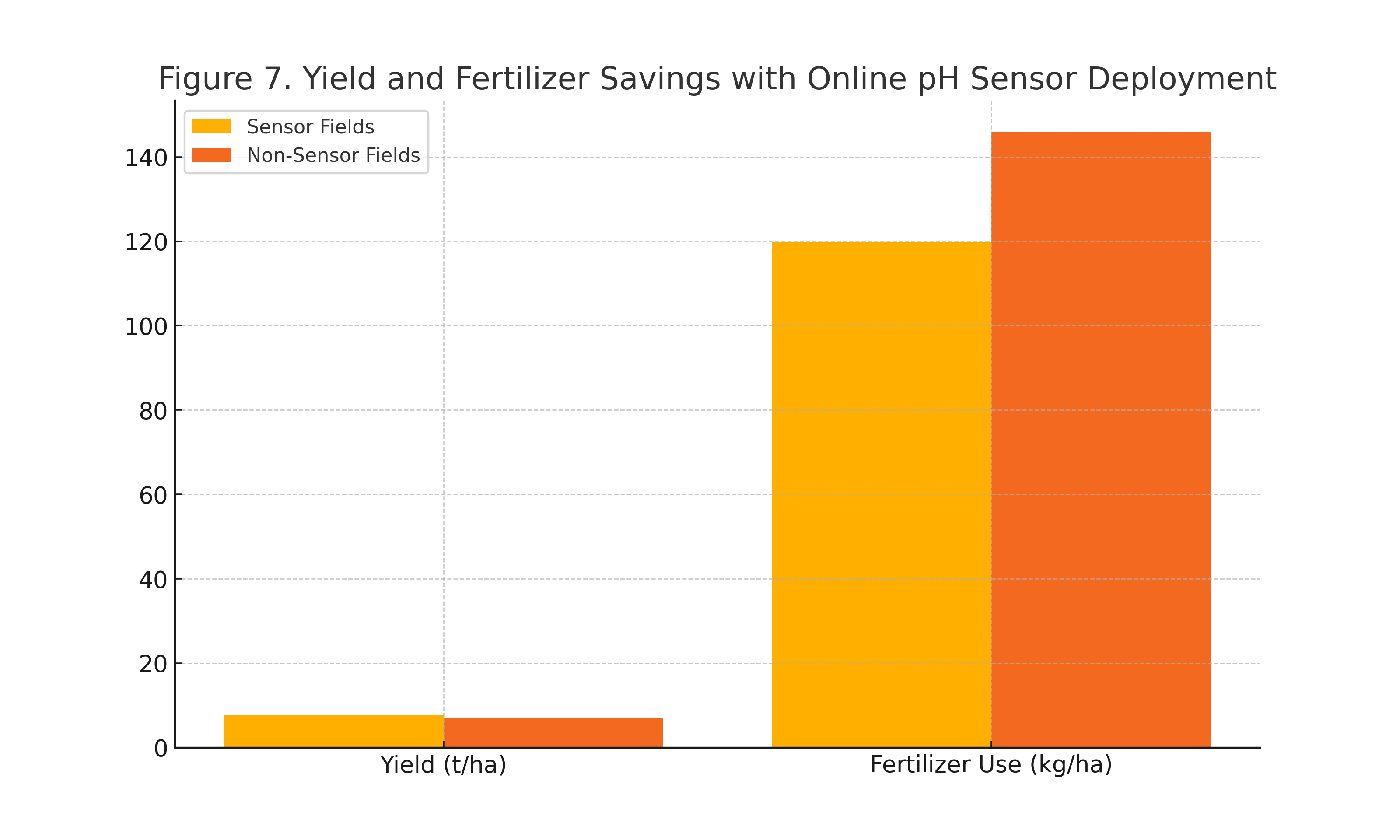 (Bar chart: Yield (t/ha) and fertilizer use (kg/ha) for sensor vs. non-sensor fields, with clear improvement for sensor-equipped plots)
7.4. Value Proposition for the Industry
Higher Yield and Profitability: By enabling timely and precise interventions
Sustainability: Reduced chemical input, improved soil stewardship
Labor Savings: Automation reduces the need for skilled sampling teams
Data-driven Management: Historic and real-time datasets support better crop rotation, land use, and environmental reporting
Key Takeaway:
Widespread adoption of online soil pH sensors is accelerating the shift toward smarter, more sustainable agriculture, with proven benefits for productivity, resource use, and environmental compliance.
7.5. Global Trends and Market Outlook
International Adoption Trends:
Globally, adoption of online soil pH sensors is growing rapidly, especially in North America, Europe, and East Asia. The European Union’s Common Agricultural Policy now encourages digital soil health
monitoring to support sustainable agriculture and environmental compliance. In the US, programs like USDA’s Precision Agriculture Initiative fund sensor-based research and deployment.
Market Size:
According to MarketsandMarkets, the global soil sensors market—including pH, moisture, EC, and multi-parameter probes—was valued at approximately USD 500 million in 2023 and is projected to exceed
USD 1.1 billion by 2028 (CAGR > 15%). Online and IoT-enabled pH sensors are among the fastest-growing sub-segments due to the rising demand for real-time, high-resolution data.
Key International Players and Solutions:
Sentek Technologies (Australia): Known for robust, multi-parameter in-field sensor arrays used in large-scale irrigation projects and vineyards globally.
Meter Group (USA): Offers IoT-ready sensors like the TEROS series, featuring integrated pH/moisture/EC probes, used by universities and commercial growers.
Delta-T Devices (UK): Supplies scientific-grade sensors and data loggers for research stations and smart farms across Europe and Africa.
Pessl Instruments (Austria): Their iMETOS SoilGuard system is widely used in orchards and for regulatory compliance in the EU.
China’s domestic brands (e.g., ZATA, China Agricultural University’s technology spin-offs): Rapidly expanding in smart farming pilot zones.
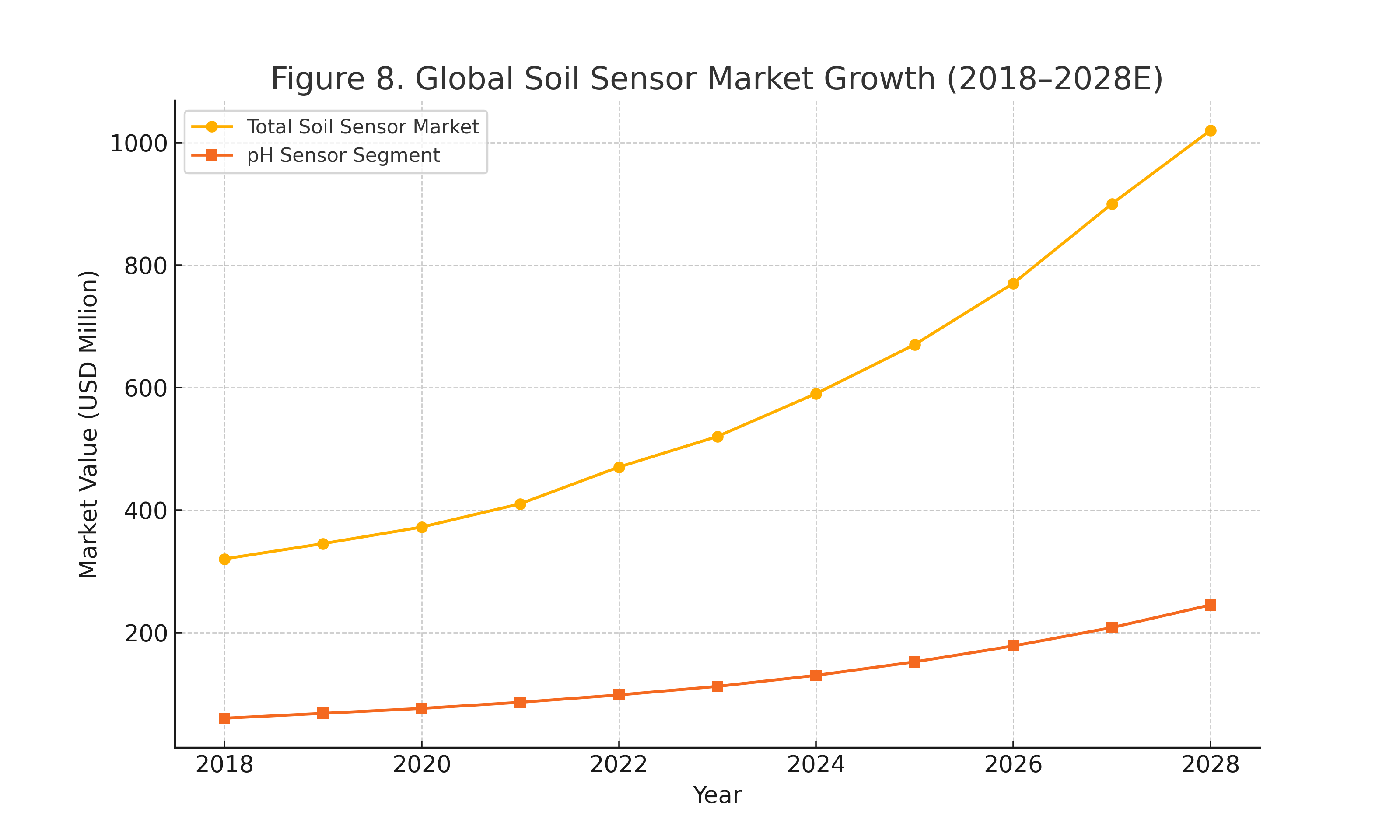
(Line chart: Y-axis = Market Value (USD Million), X-axis = Year; highlight pH sensor segment, note CAGR and main adoption regions)
International Case Study: California Vineyards
In California’s Central Valley, top wineries have deployed Sentek and Meter Group sensor networks
for precision soil pH and moisture monitoring. Results published in 2022 showed:
Reduction in irrigation water use by 11%
8% improvement in grape sugar content (°Brix), attributed to tighter pH control
Lower input costs and improved environmental certification scores
Industry Trend:
Leading agri-tech companies are increasingly offering integrated “sensor + cloud platform + AI analytics” solutions, turning pH and moisture data into actionable insights for global farms, from smallholder plots to thousands of hectares.
Key Takeaway:
The international market for online soil pH sensing is booming, with leading brands driving both hardware innovation and integrated data services. Success stories from North America, Europe, and China underline the value for productivity,
sustainability, and regulatory compliance.
7.6. More Leading Brands and Industry Bodies
Additional Notable Brands:
Hanna Instruments (Italy/USA): Renowned for portable and in-situ soil pH meters, widely used by agronomists and regulatory agencies in Europe and North America.
HORIBA (Japan): Offers scientific-grade soil pH and water quality sensors, adopted in research, precision farming, and environmental monitoring.
Spectrum Technologies (USA): Provides FieldScout series soil pH testers and complete data management solutions for both small farms and research plots.
Adcon Telemetry (Austria): Specialized in remote soil and environmental sensing, popular in large-scale European agricultural cooperatives.
Decagon Devices (now Meter Group): Innovator in integrated sensors and wireless telemetry for high-resolution field mapping.
Yara (Norway): As a global fertilizer giant, Yara partners with sensor tech firms to provide “fertilizer + soil sensor + digital advisory” packages.
Industry Organizations:
International Society for Precision Agriculture (ISPA): Drives research and standardization of smart sensor deployment.
European Soil Data Centre (ESDAC): Promotes harmonized digital soil monitoring across EU member states.
China Smart Agriculture Industry Alliance: Supports rapid sensor technology adoption and local standards in China.
FAO Global Soil Partnership: Works toward global best practices in soil health monitoring, including sensor-based systems.
8. Conclusion, Future Perspectives, and Industry Recommendations
8.1. Conclusion
Online soil pH sensors have revolutionized soil management for agriculture and environmental monitoring, providing real-time, high-frequency, and spatially-resolved data. However, their accuracy is critically dependent on
soil moisture content. Systematic experiments demonstrate that for most sensor types, optimal accuracy is achieved when soil moisture is maintained between 20–35%. Errors increase sharply under drier or excessively wet conditions—making compensation and calibration essential.
8.2. Future Perspectives
Integration: The next decade will see further integration of soil pH sensors with IoT platforms, AI-driven analytics, and remote-control irrigation/fertilizer systems.
Multi-parameter Sensing: Increasingly, sensors will monitor pH, moisture, EC, nutrients, and temperature in a single probe, supporting holistic soil health management.
Data-driven Decision Support: Cloud-based dashboards and AI models will turn complex soil datasets into actionable, automated recommendations.
Sustainability and Regulation: As governments require more precise soil monitoring, sensor networks will become standard for environmental reporting and farm subsidies.
8.3. Industry Recommendations
For Sensor Manufacturers:
Invest in robust compensation algorithms and multi-sensor integration to minimize environmental error.
Improve sensor durability, especially in harsh or variable field conditions.
Ensure open data standards for easier integration into farm management platforms.
For Farmers and Agribusinesses:
Always co-locate pH sensors with moisture sensors and apply real-time compensation.
Perform regular calibration and maintenance; adopt cloud-based monitoring for remote management.
Combine online sensors with periodic lab analysis for best data reliability.
For Policymakers and Industry Bodies:
Promote digital literacy and sensor adoption through incentives and education.
Support open standards and data sharing to maximize the value of big soil data.
Encourage public-private partnerships for large-scale pilot projects and rural digitization.
Final Remark
The global shift toward smart, data-driven agriculture relies on the successful integration of online soil pH sensors. While technical challenges remain—especially regarding moisture sensitivity—the benefits for productivity, sustainability,
and regulatory compliance are clear and increasingly essential in modern farming worldwide.


For more questions
subscribe to our email
.png)
.png)
.png)